Regenerative Safari · Southern Kenya
From Kilimanjaro to the sea.
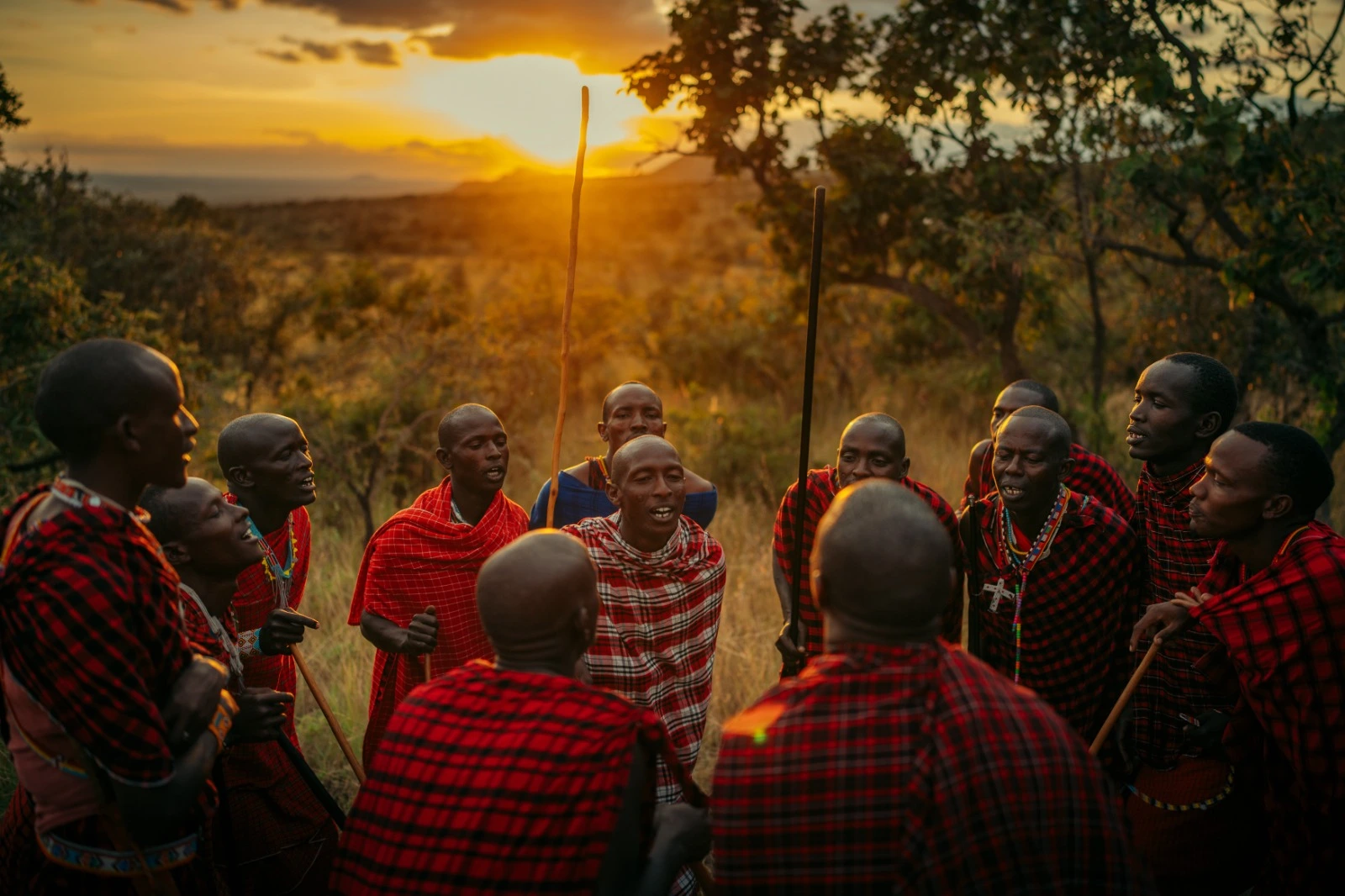
The Maasai Wilderness Conservation Trust (MWCT) is a Kenyan trust that protects the wilderness between Kilimanjaro, Amboseli and Tsavo by making it earn a living for the Maasai who own it.
It was founded in 2000 by Luca Belpietro and Antonella Bonomi with Samson Parashina, now its chairman. MWCT owns Campi ya Kanzi, Chyulu Lodge and Chyulu Wilderness Camp, and manages 417,608 acres of Maasai land with the community.
The work begins under Kilimanjaro, in the Chyulu Hills, whose rain runs underground to Mzima Springs and on to the taps of Mombasa. Through MWCT's alliances with Tsavo Trust and Safari Doctors, it now reaches across Tsavo to the islands of Lamu: from Kilimanjaro to the sea. Together, that work spans millions of acres and reaches thousands of people.
Figures for 2026
UNDP Equator Prize, 2012 · Samson Parashina, UNEP Champion of the Earth, 2012
Most conservation organisations run on philanthropy and start with the animals. MWCT starts with the people, and how they can earn from protecting their wilderness and wildlife heritage. Grants end; the land, and the families and wildlife who live on it, stay. When wild land earns more than it would cleared, fenced, farmed or burned for charcoal, the people who own it have every reason to keep it wild. So MWCT built payments for ecosystem services (PES), and the Kuku and Rombo communities have named it their agent for negotiating and managing all PES deals.
Every guest at our lodges pays a conservation fee, $180 a night per adult and $90 per child, and conservation fees alone fund Wildlife Pays: herders receive a consolation payment for livestock lost to predators, so lions are tolerated instead of speared. Leases pay Maasai landowners to keep 69,150 acres in five conservancies free of livestock, for wildlife.
MWCT is a founding partner and the project office of the Chyulu Hills REDD+ Project, which sells verified carbon credits for forest and woodland kept standing across more than a million acres. It is 100% owned and managed by local institutions, through the Chyulu Hills Conservation Trust, and five of its nine partners are local communities. It holds Triple Gold certification, the highest level, under the Climate, Community & Biodiversity Standards, and the income is shared among the partners.
The result: since 2022, earned income through PES, above all from carbon and tourism, has paid for most of MWCT's programmes.
Only 7 of MWCT's 473 employees work in finance, administration or as executive director: about 1.5%. The other 466 protect wildlife, teach, treat patients, create livelihoods and keep the operation running.
473 people in total
A Kenyan conservation organisation that works with the Kenya Wildlife Service, from the air and on the ground, to protect the Tsavo Conservation Area, home to some of Africa's last big tuskers. Together, MWCT and Tsavo Trust work to keep the Chyulu Hills and Tsavo one connected landscape.
Visit Tsavo Trust →Founded by Umra Omar, a Top 10 CNN Hero in 2016 and the UN in Kenya Person of the Year in 2017, Safari Doctors is a women-led team that takes medical care by boat and road to remote communities in Lamu, Tana River and Garissa counties. The alliance carries MWCT's model of conservation and health to the coast.
Visit Safari Doctors →Visit MWCT's headquarters, the Chyulu Conservation and Research Centre, and meet the teams behind Wildlife Pays and the Chyulu Hills REDD+ Project. Included in your stay.
Join a conservation safari with MWCT's teams: aerial wildlife counts, lion collaring and tracking, and investigations of Wildlife Pays incidents. On request.
Extend your safari to Lamu. Fly from the Chyulu Hills to the coast, spend a day with Safari Doctors in the Lamu archipelago, and stay on in Lamu's UNESCO-listed old town or on the islands. On request.
Because this is where a gift is a real multiplier. It does not keep a project on life support; it grows a model that already pays most of its own way. Carbon and tourism income rise and fall with the markets, and donations carry the work through the dips. They also pay for growth that earned income cannot yet cover: new conservancies, classrooms and clinics.